

#126 The Nowhere People

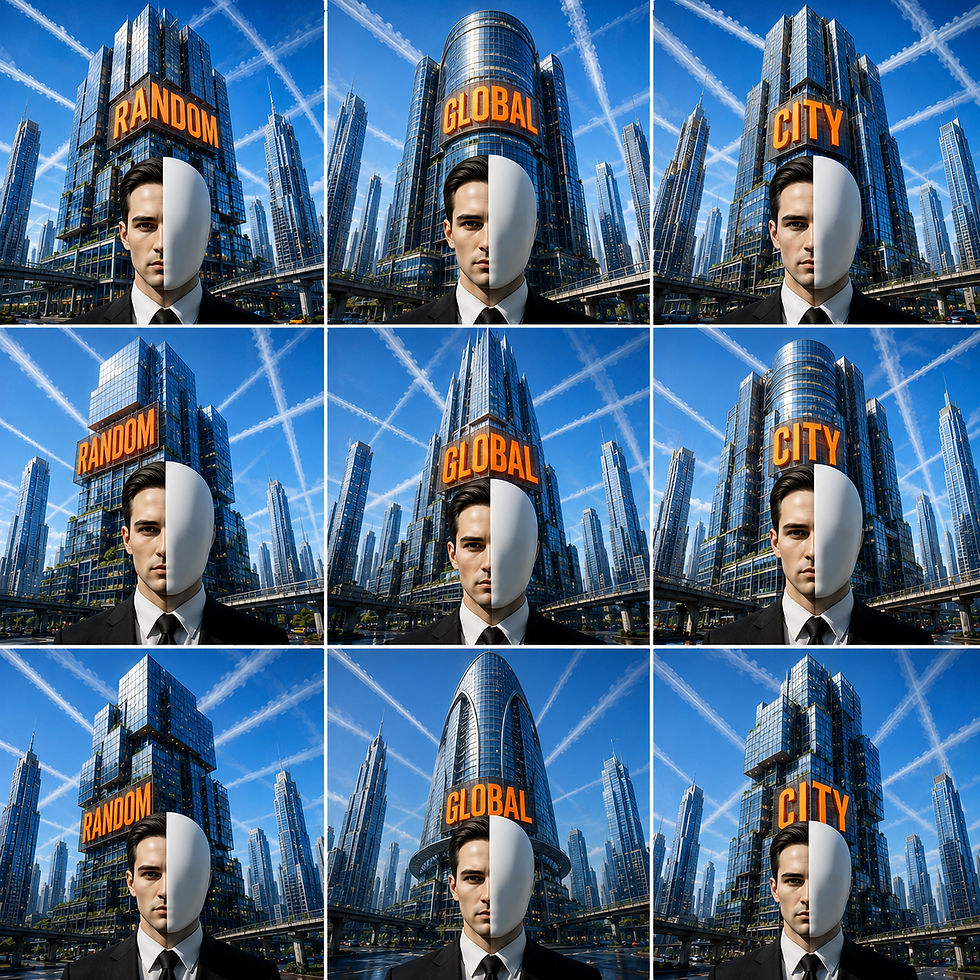
For most of history, architecture told a story. Cathedrals pointed toward heaven. Temples connected people to the divine. Town squares reflected the culture, faith, and memory of a people.
A city wasn’t just a place to live. It was a physical expression of identity.
Then something changed.
Travel from New York to Dubai, London to Shanghai, Sydney to Frankfurt. The language changes. The people change. The flags change.
But the skyline stays the same.
Glass. Steel. Reflections. Corporate towers rising from identical streets beneath identical logos.
A place without a place.
A city that could be anywhere because it belongs nowhere.
Modern architecture increasingly dissolves distinction rather than celebrating it. Every tower speaks the same language. Every plaza follows the same formula. The result is a world that appears modern yet feels strangely empty.
The ideal citizen of this world is not rooted. He is mobile, adaptable, interchangeable. Capable of living anywhere because he truly belongs nowhere.
A citizen of Random Global City.
As cities become more alike, cultures begin to feel temporary. Buildings communicate efficiency but nothing sacred. The old world built monuments to God. The new world builds monuments to process.
Cathedrals became headquarters.
Transcendence became compliance.
And standing at the centre of it all is the faceless corporate figure: half man, half mannequin. Not an individual, but a function. A professional identity floating above nation, culture, tradition, and place.
The perfect resident of the international nowhereland.
Because when every place becomes interchangeable, people begin to feel interchangeable too.
The skyscrapers continue to rise. The skylines continue to converge.
And the destination becomes clear:
A world where everything is connected, yet nothing is rooted.